

By Cue Sibiya
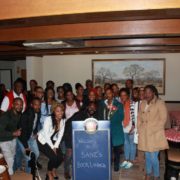
Sane Sihiya’s commitment in helping Africans understand and embrace their heritage in a progressive way, was demonstrated this past weekend when she successfully launched her long-awaited and self-published book titled “Uncensored Black Consciousness: The Return”. With the aim of discussing the impact of experiences such as Black pride, the land, racism, the media, and Black excellence – the launch did not disappoint in convening a platform for candid conversations.
Baradi Moletsane, a Communications Specialist and a Writer Extraordinaire, chaired the panel discussion. She kicked off the session by sharing detail on how apartheid and Black people segregation was formulated. She described the emphasis placed on the dignity of the human person and, in particular, the dignity of the Black person considering what the system of apartheid was intended to do: dehumanise Black people. Moletsane was also quick to point out that most Black people are increasingly directionless with a bigger risk of losing sight to the challenges that Black people are currently facing.
“If you look at our failures in standing up for ourselves in the corporate world, there is absolutely no doubt that the principles of Black Consciousness has been negated. That’s why this book is the perfect fountain from which all wisdom should flow in dealing with this problem. South Africans are not on an equal footing – we live in a decidedly unequal society, and although we have certain hard-won freedoms, the majority of our people (most of whom are black) are unable to access these freedoms because they are trapped in the vicious cycle of poverty,” said Moletsane.
Also forming part of the panel was Pakama Ngceni, a Black Consciousness Activist and former Journalist. She emphasised the fact that the celebration of Black excellence is not racially motivated; it is about a sense of self-worth which sees ordinary people of colour embracing their identity and viewing themselves in a glorious light.
“The issue of Black consciousness is even more loaded than I previously thought, all the more reason for us to have the discussion and unpack the issues, no matter how uncomfortable they may seem,” said Ngceni.
Commenting on how the media continues to side-line Black people, Thobile Hans, Activist and former Journalist, highlighted that the lack of racial diversity in media is rampant.
“Everyone should have characters or images they can relate to. It’s part of how we understand ourselves. Without equal representation, there are people who are not being heard or seen. In a nation and world as diverse and complex as ours, the last thing we want is to lose the stories of a large portion of our people,” said Hans – who then made reference to the book being launched that it gives a clear picture on how the media, in general, is not catering towards Black people.
The launch had numerous questions from a fascinated audience. Sihiya and the panel were able to respond to those questions smoothly. In her closing remarks, Sihiya asserted that she wrote the book for Black people to understand themselves.
“I believe that, through this book, Black Consciousness will reinvigorate the inherent agency of Black people that has been thwarted by apartheid and placed Black people at the centre of their liberation. I strongly believe that we should look up to Steve Biko who founded the Black Consciousness movement, urging young people to commit themselves to the fight against apartheid. My book is not a regurgitation of what’s already been said, if anything, my book – as captured in the title – is about returning to the heart of Black Consciousness,” said Sihiya.


